Skip to content

Re-thatching

Re-thatching in Hertfordshire and the Home Counties

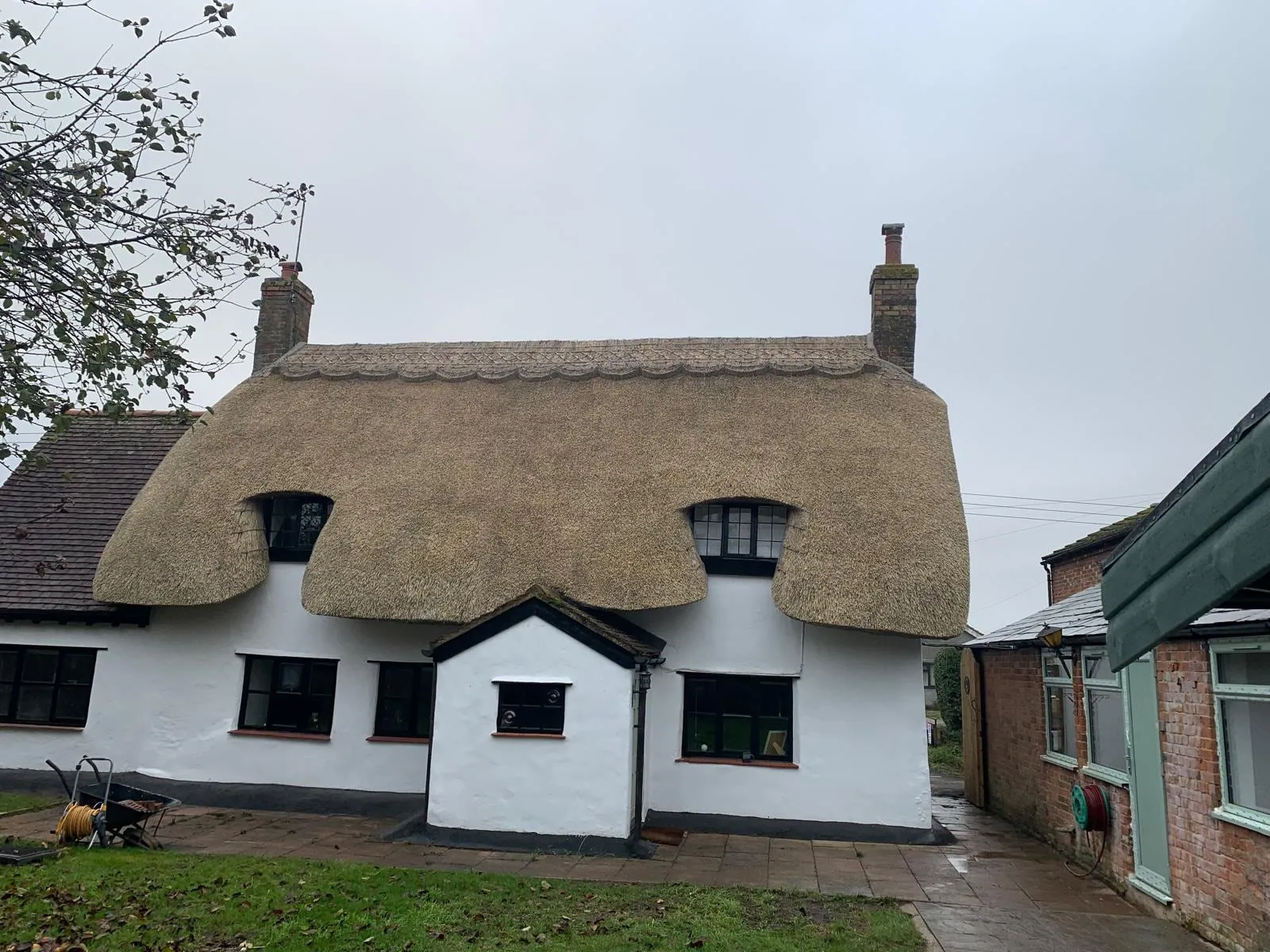
When a thatched roof wears thin, the coat no longer sheds water well. A re-thatch removes the worn material back to a sound base and lays a new coat. We then finish the roof with a new ridge.

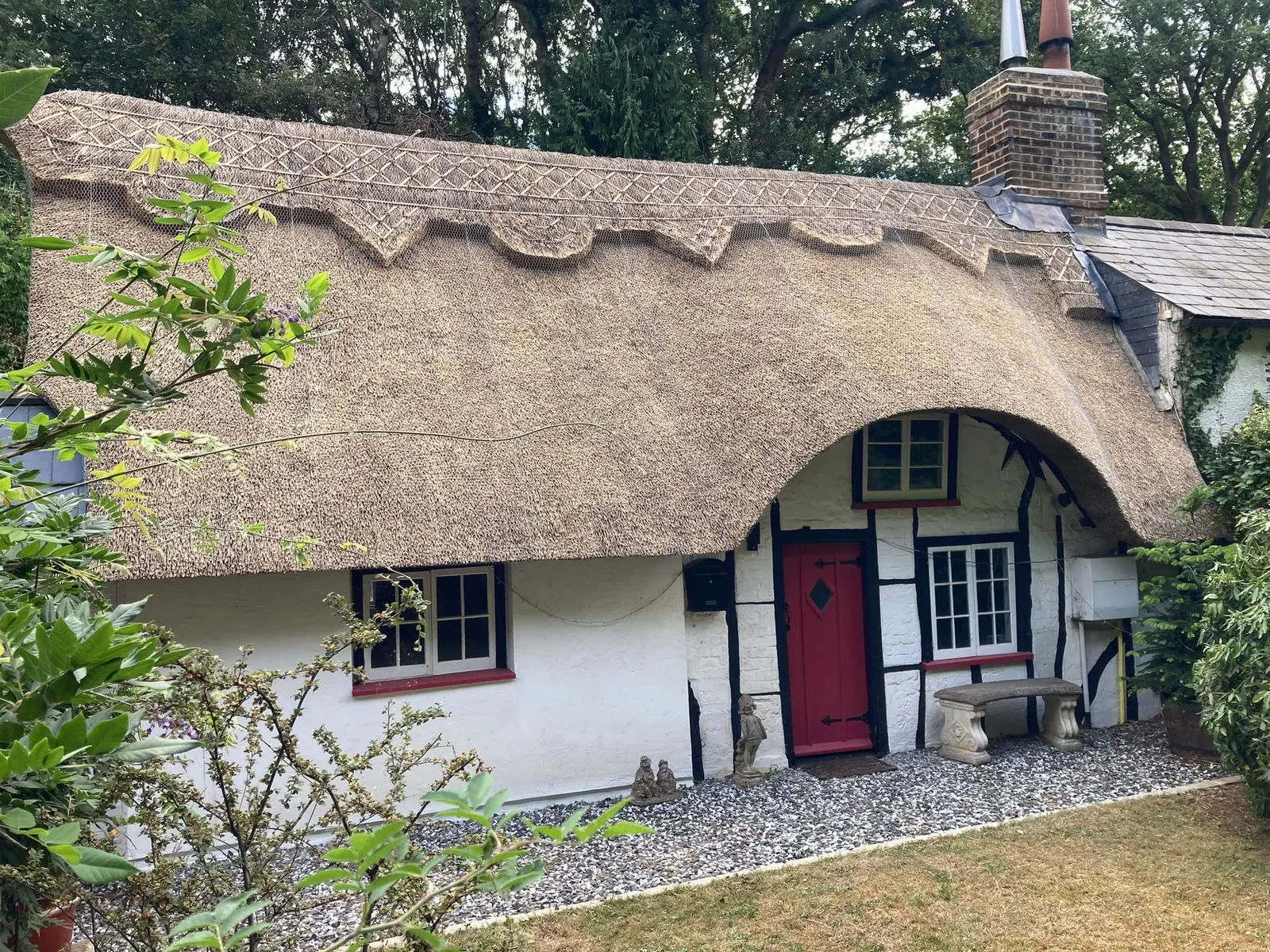
A stone cottage with a new reed coat and a pointed block-cut ridge

When does a roof need a re-thatch?

Look for fixings (the hazel spars and liggers) that show on the surface of the coat. Look also for deep gullies, thin patches near valleys and chimneys, and damp in the roof space.

A well-laid Norfolk water reed coat lasts 50 years or more. A combed wheat reed coat usually lasts 25 to 35 years, and long straw 15 to 30 years. Roof pitch, trees and weather change these figures.

If you are not sure, book a free roof check. We tell you how many years the coat has left and what work to plan.

How we re-thatch a roof

We arrange scaffold, which is an extra cost, and protect the house and garden. We strip the old coat back to a firm base. Then we lay the new reed in courses from the eaves to the ridge, and fix each course with steel crooks or hazel spars.

We dress the reed tight with a leggett, so the finished coat is dense and even. We shape the eaves, gables and eyebrow windows by hand. Last, we cut and fix a new ridge.

We are licensed waste carriers. We remove all the waste from site as part of the service, so you have no legal liability for it.

Materials

We thatch in all three main materials: long straw, combed wheat reed and water reed. We use English material where possible. Our water reed comes from Norfolk, and our wheat reed and long straw are grown in England when supply allows. Water reed is the hardest-wearing of the three.

Long straw is the traditional thatch of Hertfordshire and Essex. It gives the soft, rounded look of an old cottage roof, with hazel liggers on show at the eaves and gables. We re-thatch long straw roofs in long straw, so they keep their character.

If your house is listed, a change of material can need listed building consent. We give you free advice, and we can speak to the conservation officer with you.

Where we do this work

We are based in Hertfordshire and do most of our work in the county. We also cover west and north Essex, Buckinghamshire, Bedfordshire, North London, Cambridgeshire and Northamptonshire, within about 60 miles of our base.
Our materials

Three materials, English where possible

We use English material where possible. Each one lasts a different time, so the choice of material is also a choice about cost per year.

  • Norfolk water reed

    Lasts 50 years or moreHardest-wearing

    The hardest-wearing material we use. A hard, hollow reed cut from the Norfolk wetlands. It gives a crisp, dense finish with sharp edges.

  • Combed wheat reed

    Lasts 25 to 35 years

    English wheat straw, combed so all the stems lie the same way, then laid butt-ends down. A neat, close finish that suits most cottages.

  • Long straw

    Lasts 15 to 30 years

    English threshed wheat straw, laid loose for a soft, rounded coat with hazel liggers on show. The traditional thatch of Hertfordshire and Essex.

These are typical figures for a well-laid coat. The ridge wears faster and needs replacing every 10 to 15 years. Roof pitch, shade from trees and the weather change how long a coat lasts.

Recent work

Questions people ask us

How long does a thatched roof last?

A Norfolk water reed coat lasts 50 years or more, so it is the hardest-wearing material. A combed wheat reed coat usually lasts 25 to 35 years, and a long straw coat 15 to 30 years. The ridge wears faster, so it needs replacing every 10 to 15 years. Roof pitch, shade from trees and the quality of the work all change these figures.

How much does it cost to re-thatch a roof?

Every roof is different, so we give you a free fixed-price quote after we see it. As a general guide, national 2026 price guides put a full re-thatch of a typical cottage in the South East at about £16,500 to £22,500 in combed wheat reed, and more in water reed. A re-ridge alone is usually £3,500 to £8,000. See our thatching costs page for more detail.

What is the difference between long straw, combed wheat reed and water reed?

Long straw is threshed wheat straw, laid in a loose, shaggy coat with a rounded look. It is the traditional thatch of Hertfordshire and Essex. Combed wheat reed is wheat straw that is combed so all the stems lie the same way, then laid with the butt ends down for a neater finish. Water reed is a hard, hollow reed from wetlands such as the Norfolk Broads. It gives a crisp, dense finish and lasts longest, 50 years or more. We use English material where possible, and advise which suits your house.

Do you use English thatching material?

We use English material where possible: water reed from Norfolk, and English-grown combed wheat reed and long straw. If English supply is short, we tell you before we order.

Do you thatch in long straw?

Yes. We thatch in long straw, combed wheat reed and water reed. Long straw is the traditional material in Hertfordshire and Essex, and many listed cottages must keep it. We re-thatch long straw roofs in long straw.

Do I need permission to re-thatch a listed building?

Usually not for a like-for-like re-thatch. But a change of material or ridge style on a listed building can need listed building consent from your council. Speak to the conservation officer first. We give free advice and can come to the meeting with you.

Can we live in the house while you re-thatch it?

Yes. Most owners stay at home while we work. We work from scaffold and keep the site tidy. One client wrote that our care, attention and helpfulness minimised the disruption.

Other services

Free quote and roof check

Get a free quote for re-thatching

We visit, look at the roof and give you a written, fixed-price quote. It is free, with no obligation. For a repair, send us photos first.

  • A fixed price, with a full description of the work
  • Every quote is valid for 12 weeks
  • A 5-year written guarantee on all completed work
  • All waste removed as part of the service. Scaffold is an extra cost.

Or call 07860 292801

Ask for a free quote or roof check

Tell us about your roof. We reply by phone or email. If you prefer to talk, call 07860 292801.

For example: when it was last thatched, the material, or whether the house is listed.

Photos of the roof (optional, up to 6)

    We reply within 1 working day. We use your details only to reply. Privacy notice.